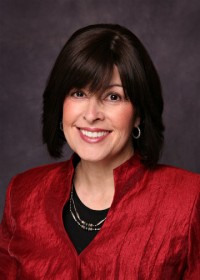
Toby Klein Greenwald
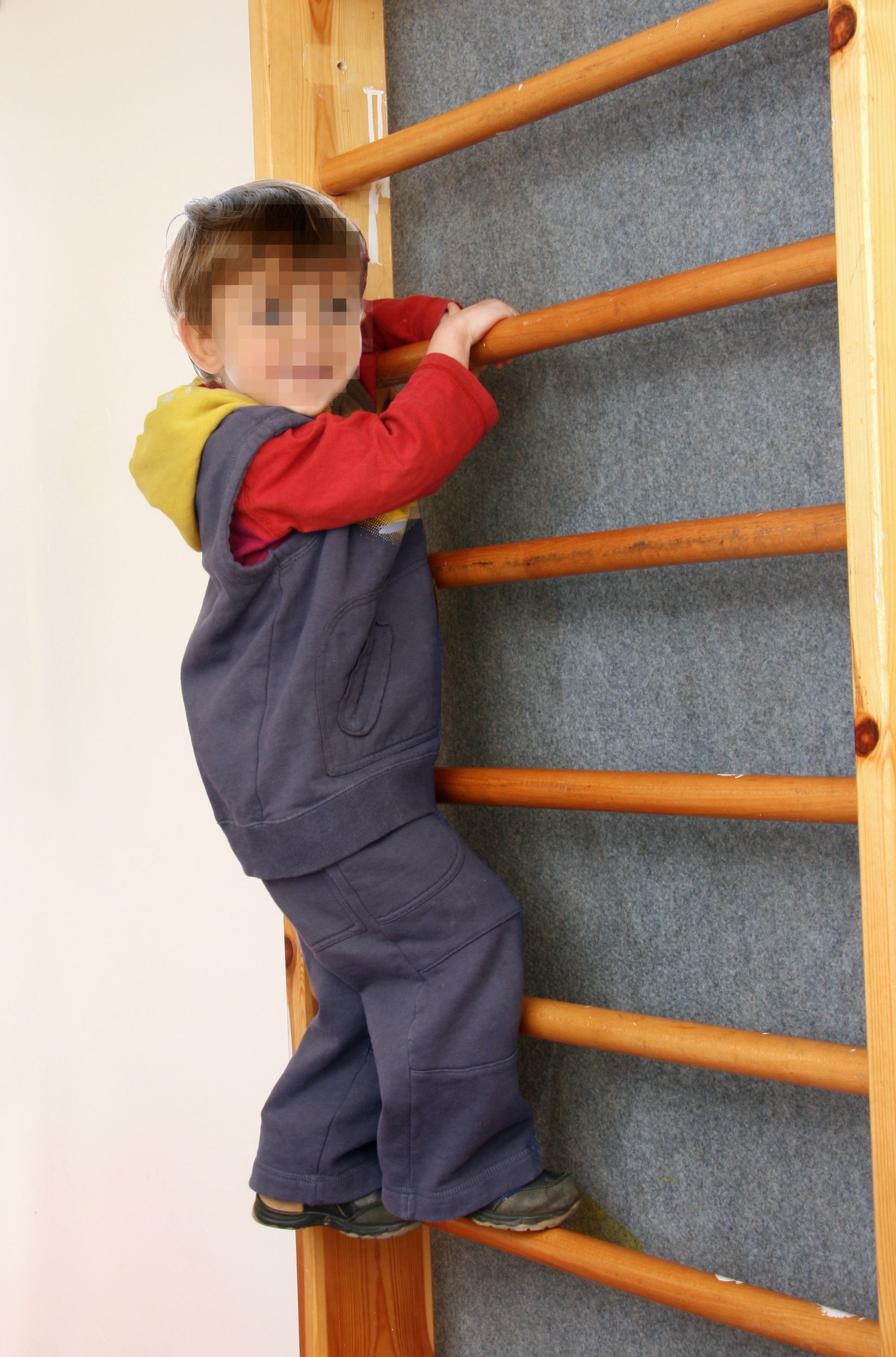
Almost every great organization or institution begins with a personal story. I discovered one such school-therapy network in Israel — the SulamSpecialEducationCenter. “Sulam” is Hebrew for “ladder,” because they appear to be helping many children with disabilities climb higher than they ever thought possible.
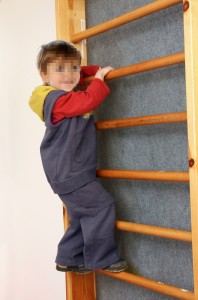
In the case of Sulam, the inspiration came from a woman whose eyes and heart were open enough to see someone else’s story. I think there is something in her story from which we all can learn.
It had modest beginnings. Mrs. Feiga Ernster, a native Chicagoan, married in Israel and opened a small neighborhood playgroup. A neighbor in her building asked if her disabled son could join the group. She agreed, and soon other mothers of children with special needs heard about this playgroup that would accept their children. Mrs. Ernster realized that she was addressing a problem that she hadn’t even known existed.
Ernster decided to make her naturally inclusive playgroup more official, and began the bureaucratic process of hiring professional staff, obtaining permits and licenses and evaluating the children in order to address their individual needs – a daunting challenge, but one which she undertook with love and dedication, opening her first official class in 1981.
That dedication continues to impact on the special atmosphere I encountered at one of their Jerusalem branches, which I visited recently, on a sunny winter day.
A staff member ascended with me from floor to floor, pointing out the colorful rooms filled with joyful children. “Mainstreaming was in place at Sulam long before the word became fashionable,” Chana Kallner, Sulam’s Director of Development told me. “The professional staff at Sulam feel that all children gain from ongoing interaction with special needs kids. And so, from a small playgroup, run by a woman of great heart and the talent and organizational capacity, Sulam has grown into a premier special needs organization.”
Today Sulam has ten branches throughout Israel. When I looked over their annual report, a number of things caught my eye. First of all, Sulam is supervised by nine government and municipal offices, which means there is full accountability.
Chana says that they believe that the treatment and care Sulam offers during the critical toddler and early childhood years is of immeasurable benefit to the future development of these children. It is a known truth in any area of education – that the younger we get to them, and the more personal the interaction, the greater chance for success. What I saw on my visit was small, cheerful classes, clearly enabling each child to receive a more individualized program.
Warmth and Caring, professionalism facilitate mainstreaming
I observed an extraordinary atmostphere of warmth and caring. The Sulam directors say their high success rate is due to this attitude of their staff, and also to their professionalism. Their goal is to achieve integration into mainstream educational systems where possible; they claim to achieve this with 30% of the children. Indeed, their mission statement is “to enable children with special needs to attain the highest quality of life they are capable of achieving, with the ultimate goal: each child’s successful integration in society.”
Esther Ernster, daughter-in-law of the founder, is the director of Sulam today. She stepped into the role thirteen years ago, at the request of her mother-in-law, as a co-director, and since 2012 has been the official director.
“The nondisabled children learn to interact and appreciate the ‘others’ in their lives,” writes Ernster in her annual report. In addition, she says, “Sulam has seen a sea change in the parents of the nondisabled children, which is especially gratifying. From their initial reluctance to allow their normal children to learn and play with ‘different’ children, the parents have come to see the benefits of such a system. This marks a dawning awareness in the community, and a willingness to see integration as the norm, rather than something to be feared and avoided.”
One-to-one staff to student ratio
There are approximately 500 children in Sulam’s various programs, ranging in age from 6 months to 17 years, in centers in Jerusalem, Beit Shemesh, Modi’in Illit (Kiryat Sefer) and Kiryat Yearim, with almost 500 full and part time staff and 55 National Service volunteers. The staff includes special education teachers, paramedical therapists, counselors, educational advisors, psychologists, social workers, a pediatric neurologist and tutors.
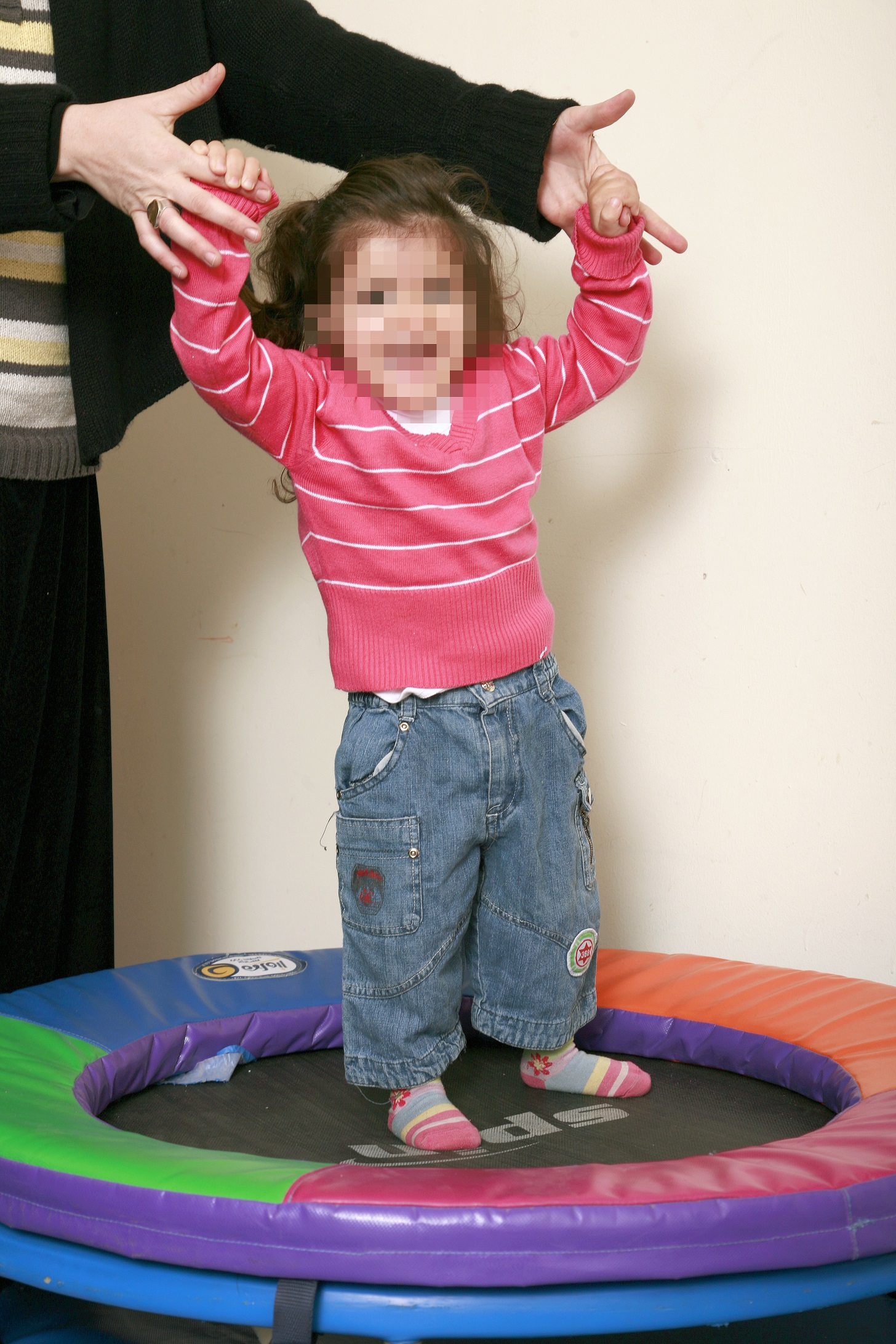
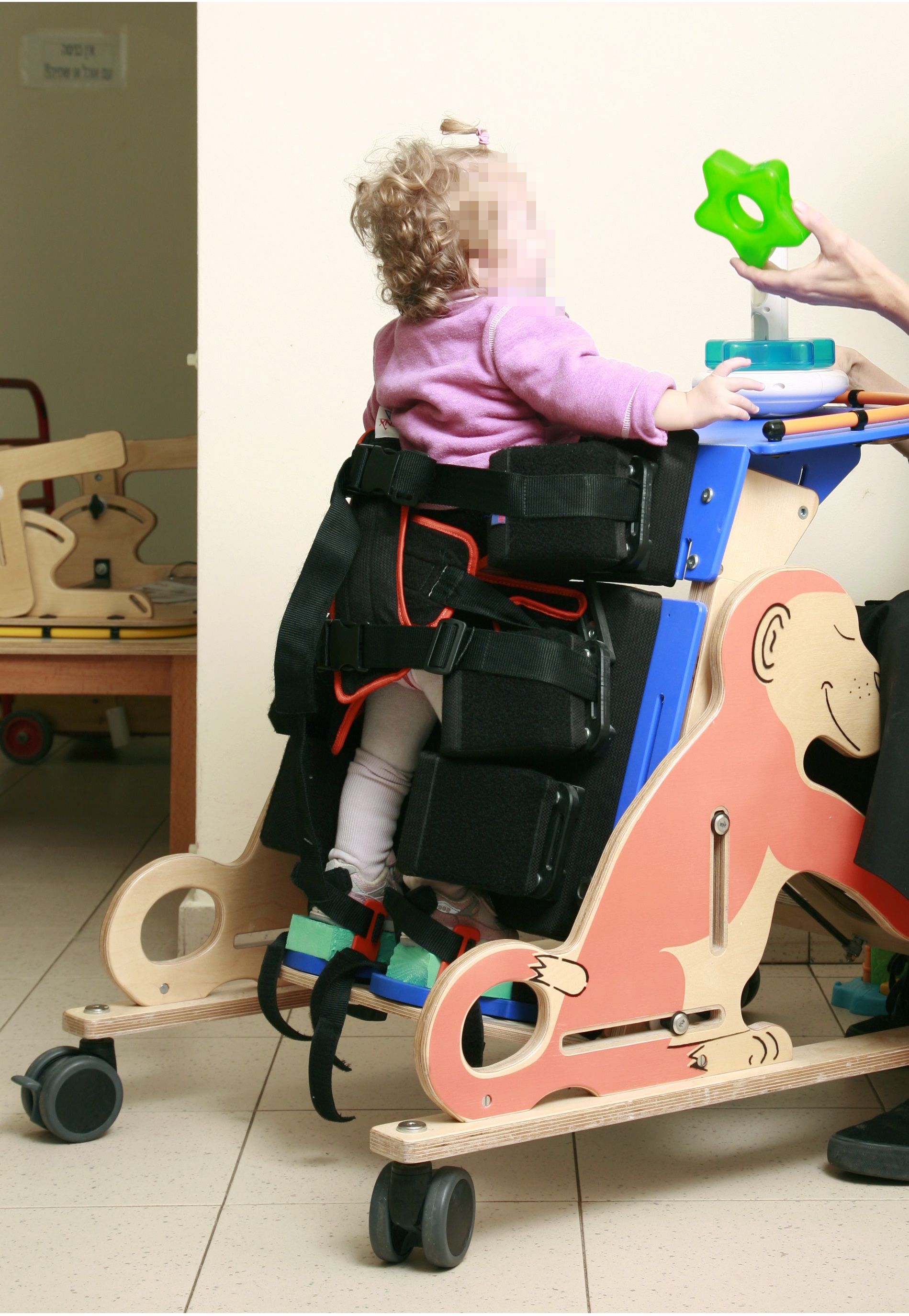
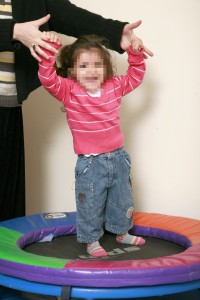
Therapies include speech and communication, occupational, physical, music, zoo, play, sport. More exotic therapies include “Floortime” Therapy (D.I.R. Program), which helps children with communication disorders learn to interact with others through an individualized approach, where caregivers enter the child’s world, share his feelings, and help him learn to relate to the world around him, and Multi-Sensory Treatment in a Snoezelen, which Improves sensory balance, promotes calm and well-being, arouses passive children. Most of the centers offer full day programs.
They address the needs of the rest of the family, as well, with private sessions, support groups, seminars and conferences, that help parents and siblings cope and accept the child with special needs as an integral part of the family. The combination of knowledge and love appears to give the families the tools they need to cope and to feel comfortable, capable and loving toward their disabled child.
Afternoon enrichment programs help students develop in the non-scholastic areas, such as art, music and dance. Sulam provides programming during most regular school vacation days, which helps provide parents with time to give to their other children.
Generosity breeds generosity
Sulam offers free evaluations for parents who suspect developmental problems in their children. The organization participates in research projects and has pioneered many new treatment methods.
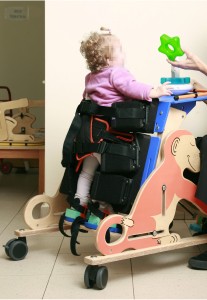
In addition to private donors, Sulam enjoys the support of the Jewish Agency, PEF, and the Sobell, Bachrach, and Donald Berman Foundations. Sulam has also received help from businesses, such as Bank Yahav, Checkpoint, Discount Bank Investments, the Israel Electric Company and Mercantile Bank. These have all contributed funds for specialized therapeutic programs or equipment.
The network has won several prestigious awards, including the Trump Chessed Award and the Jerusalem Mayor’s Award.
One family’s story
I spoke with the mother of a Sulam student. I’ll call her “Devorah” and her son “Moshe.”
Devorah, originally from New York, says, “From 18 months old we knew that something was a little ‘off’ but we could not put our finger on where the problem lay. He didn’t know how to deal, at three years old, with normal social situations that arose. He would wonder, ‘Why am I being punished?’ and there was a lot of discommunication. He was constantly getting into trouble and he couldn’t be in a regular pre-school. He didn’t appear to be on the spectrum of autism so it was hard to get a diagnosis. As he grew older social acclimation was not progressing — he just was not coping with the situations, nor did the standard school have the resources and/or know how to deal with him.
“Academically he excelled to be one of the top students in the class, but socially he was falling way behind, causing him significant low self esteem, etc. At first the staff tried above and beyond the standard to help him succeed, at which point the unanimous decision was that he would be better off in a smaller school with children of the same intelligence level. The problem was that no such school existed in Israel. After much worry over the summer vacation about how to proceed the following school year, which was due to start in two weeks, Sulam announced that they will undertake to open a class for the coming year.
“I don’t know where Moshe or we would be today if not for Sulam. The professionals there totally took control, assessed him almost on the spot, and they’re dealing with it. He’s been there since 2010.
“In the beginning it was rough for him, like any new place, but even so, it was still a thousand times better than where he was before, where he had no self worth anymore. They had really tried in his previous school, they did their best, but they just did not have the skills. Even when there was initial turmoil while he was settling in to Sulam, he was still gaining. The teachers there really learn with him, they know it’s his bar mitzva soon. He’ll be 13 after Pesach. They are saving his life.”
I asked Devorah for an example or two of how Sulam is different from a “regular” school.
“The main thing is that things that would be not acceptable in a regular school are understood by the staff at Sulam as him behaving a certain way not because he’s trying to be mischievous, so it doesn’t become a battle. I don’t get called every day. They work with him and explain why it’s not acceptable. The kids feel very close to the teachers. If something happens that they’ll have to deal with, I usually know about it, but my son doesn’t have to know about it. For example, there was an issue last year on the bus; some of his behavior and speech was not acceptable, and this was going on for about a year. Maybe he would hit another child, or fight with someone, or speak inappropriately, and the driver wasn’t happy but the school kept saying, ‘There is no such thing as not letting a certain child ride on this bus; we’ll deal with it.’ The principal even said, ‘If you don’t allow this child on the bus, I’m taking every kid off. I believe in him and he did not do what you claim that he did.’
“He showed my son that he trusted him and he told me, privately, ‘Believe me, I was nervous [because they really needed that bus company],’ but it turned Moshe around. The principal knows every child, he encouraged one of the teachers to take Moshe to the mincha prayers, and he loves it. Moshe even asked my husband if he could study the Talmud with him, like he does with his brother. Right now they are giving him so many skills, I am no longer worrying about the future.”
Devorah’s husband adds, “I see the greatest advancement this year. Each year I get more inspired. From when he went in untill where he is at now, he’s a totally different person. He has potential and they’re helping him achieve it, I never thought it would be so fast and so easy and go so well.”
Devorah says, “It has been a blessing.”
Today’s director: A Hassidic mother of nine children
Ernster says, “The specialty of Sulam is that we offer an answer for every request; if there is a problem, we find a way to help. That is how so many frameworks and classes developed over the years, through our desire to respond to the needs and our decision to turn no one away. As a result, today we have programs that address a wide variety of issues. Every branch has its specialties and its specialists so the children have access to a wide variety of professionals.

“As a result of this expansive network, we sometimes discover that children had not been properly assessed. For example, many children who were thought to be autistic turned out to have emotional problems. Children who were thought to have developmental problems were discovered to have communication issues. Those who worked with them in the areas of communication discovered fears or emotional issues. We are able to identify the real problem.
“We have Observation Kindergartens for children who come with delayed development. We observe them and in the course of the years we figure out what the problem is and then it turns out he didn’t have learning disabilities, for example, or that sometimes the behavior disturbances were due to a sensory problem, but to arrive at that conclusion we needed many of the best professionals in the area and at Sulam we have the highest level of interdisciplinary staff.”
Ernster emerged from the field of regular education. She was a happy junior high school teacher when her mother-in-law asked her to help out at Sulam. She asked advice from the Vishnitzer Rebbe, the spiritual leader who she and her husband follow, and he encouraged her to go for it. Today, a mother to nine children, she oversees an organization with a budget of almost nine million dollars a year.
As she began to understand the breadth of what was involved, she began to take courses in management, finance and human resources at various colleges and universities. Now, she says, “I have many connections with colleagues throughout Israel. I went wherever necessary to learn from them.” Today she is an active participant in a number of important professional forums.
How was it as a Hassidic mother to become an active member of this managerial and professional world?
“When one comes from a place of true mission and you want to do the job the best you can, then you go to the places from which you’ll learn. I believe in using the highest level professionals. This also gives us a sense of confidence in spite of government cutbacks. We’re surviving, but it’s not easy.”
She says that Sulam’s two greatest challenges at the moment are replenishing the 30% loss they have taken by the Ministry of Education’s cutbacks on therapies, a challenge many schools are dealing with. “We can’t do less, so we spend more than we receive.”
The other need is the special project they are in the midst of completing at their branch in northern Jerusalem. “We are finishing the building of a therapeutic swimming pool and what we need now is the equipment for the pool. It has been proven in recent years that hydrotherapy can significantly help many different problems. Sulam feels an obligation not only to our children but also to the greater community in this area that will benefit from a therapeutic pool.”
Ernster and her colleagues are inspiring and prove that knowledge and love can help any child climb that ladder to a better life.
For more information visit: www.sulamisrael.org

 RSS Feed